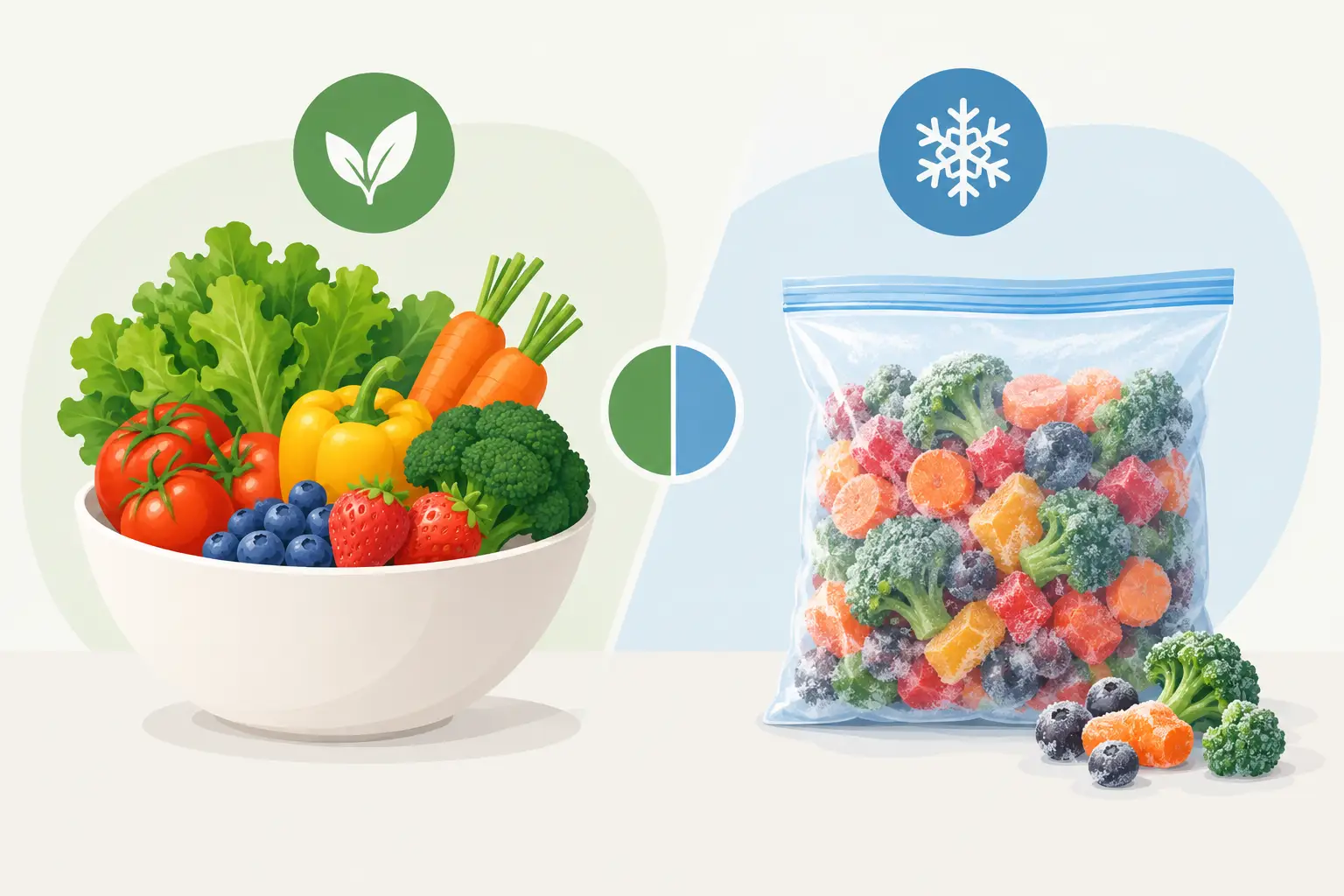
A late meeting runs over. Training starts in an hour. Your refrigerator holds good intentions, but not a complete meal. This is where the fresh versus frozen question becomes practical: which option helps you eat to your standard when your schedule applies pressure?
For performance-focused eating, the answer is not automatic. Fresh food can deliver excellent texture and flexibility. Frozen food can protect ingredients, extend usability, and remove the waste that disrupts a structured plan. The better choice depends on the food, the storage method, and how reliably it fits your week.
Fresh Versus Frozen Is Not a Quality Contest
“Fresh” often signals quality because it suggests a shorter path from ingredient to plate. That can be true, especially with produce used soon after purchase, seafood cooked promptly, or meals prepared and eaten within their intended window. Fresh ingredients can offer crisp texture, vivid flavor, and the freedom to change your meals based on the day.
But fresh does not always mean newly harvested or nutritionally superior at the moment you eat it. Produce may spend days in transport, storage, and your refrigerator before it reaches your plate. During that time, some nutrients can gradually decline, particularly those sensitive to light, oxygen, and heat.
Frozen ingredients follow a different path. They are commonly frozen close to harvest or shortly after preparation, which slows the changes that occur over time. That matters when a bag of vegetables or a prepared portion will sit in your kitchen for a week or longer. Freezing is not a shortcut around standards. When handled well, it is a storage tool that preserves availability and reduces unnecessary food waste.
The right question is not, “Is frozen bad?” It is, “Does this food still provide the nutrition, portion control, and convenience my routine requires?”
Nutrient Retention Depends on the Ingredient
Fresh and frozen foods can both support a high-quality nutrition plan. Protein, carbohydrates, fats, fiber, and most minerals are generally stable through freezing. A frozen chicken portion, for example, remains a practical protein source when it is properly prepared, stored, and reheated.
The differences are more nuanced with vitamins and water-rich vegetables. Some vegetables are briefly heated before freezing to protect color, flavor, and texture. This step can reduce certain heat-sensitive vitamins. Yet fresh vegetables can also lose nutrients during extended storage. If frozen broccoli is the version you will consistently eat with lunch, it may serve your nutrition better than fresh broccoli that gets forgotten in the crisper drawer.
Preparation matters as much as the fresh or frozen label. Boiling vegetables in excessive water for too long can reduce quality in either format. Shorter cooking methods, controlled heat, and sensible portions protect both texture and nutritional value. A good meal is not defined by an ingredient’s temperature before cooking. It is defined by the standard of the finished plate.
Consistent Energy Requires More Than Fresh Ingredients
For demanding workdays, energy crashes rarely come down to whether vegetables were fresh or frozen. More often, they come from skipped meals, oversized portions, low protein intake, or relying on whatever is available when hunger becomes urgent.
A performance meal should be built around a clear structure: a reliable protein source, purposeful carbohydrates, vegetables or fiber-rich sides, and fats that fit the meal’s objective. That structure supports steady energy, better focus, and more predictable training recovery. It also makes nutrition easier to repeat.
Fresh ingredients can work exceptionally well when you have time to shop, prepare, and use them before quality declines. Frozen components can be equally useful when they make that same balanced plate available on a packed Wednesday night. The advantage is not in choosing one category forever. It is in building a system that prevents gaps in your eating routine.
This is especially relevant for professionals who try to make every meal decision between calls, commutes, and workouts. Willpower is not a meal-prep strategy. A prepared option with known portions and clear nutrition is often the stronger choice than an ideal plan that requires more time than the day allows.
Texture and Taste Still Matter
Nutrition that stays untouched in the refrigerator does not improve performance. You need meals you will actually want to eat, and this is where fresh and frozen foods can feel different.
Fresh produce often has an edge in crispness. Leafy greens, cucumbers, herbs, and delicate fruit are generally best when used fresh. Their appeal comes from water content and structure, both of which can change significantly after freezing and thawing.
Other ingredients handle freezing very well. Berries work well in smoothies. Peas, spinach, green beans, and many cooked grains can remain useful and flavorful when frozen correctly. Prepared proteins and composed meals can also retain quality when packaging, cooling, storage, and reheating are managed with precision.
The practical standard is simple: use fresh food where its texture is central to the experience, and use frozen food where its convenience and shelf life protect consistency. You do not need to force frozen lettuce into your routine. You also do not need to treat frozen vegetables as a compromise.
Fresh Versus Frozen for Meal Planning
The strongest nutrition plans use each format with intention. Fresh food is ideal for meals you expect to eat soon and ingredients that benefit from a just-prepared finish. Frozen food creates a dependable reserve for the periods when grocery runs, cooking, or unexpected schedule changes are not realistic.
Think about your week before you shop. If you know you will be home for two planned dinners, fresh fish and a crisp salad may fit perfectly. If your calendar is full and your training schedule is fixed, freezer-ready vegetables, portioned proteins, and prepared meals can prevent reactive choices later in the day.
Portion control is another factor. Large fresh purchases can create pressure to eat more than planned before food spoils. Individually portioned frozen items help you prepare what you need, when you need it. That supports calorie awareness without turning every meal into a calculation exercise.
Food safety also deserves discipline. Keep fresh foods refrigerated promptly, follow their use-by guidance, and avoid leaving cooked meals at room temperature for extended periods. For frozen foods, maintain a stable freezer temperature, keep packaging sealed, and reheat thoroughly according to the meal’s instructions. Quality is protected through process.
A structured meal service can remove much of this decision load. Prime Fuel Meals is built for people who want chef-prepared portions and dependable delivery without turning nutrition into another daily task. The goal is not to make food complicated. It is to make high standards repeatable.
Choose the Format That Protects Your Routine
If you can buy fresh ingredients, prepare them promptly, and enjoy them at their best, fresh food earns its place. If freezing helps you keep balanced meals available, avoid waste, and stay aligned with your targets, it earns its place too.
Your nutrition does not need to look impressive in a grocery cart. It needs to perform on the days when time is tight, energy is limited, and your standards still matter. Build your kitchen around that reality, then let consistency do the work.